Laboratory experience
Cell culture, RNA extraction, qPCR, gel electrophoresis, thiochrome and MTT assays, mouse-brain image analysis, QuPath, and data interpretation.
Undergraduate researcher · University of Florida
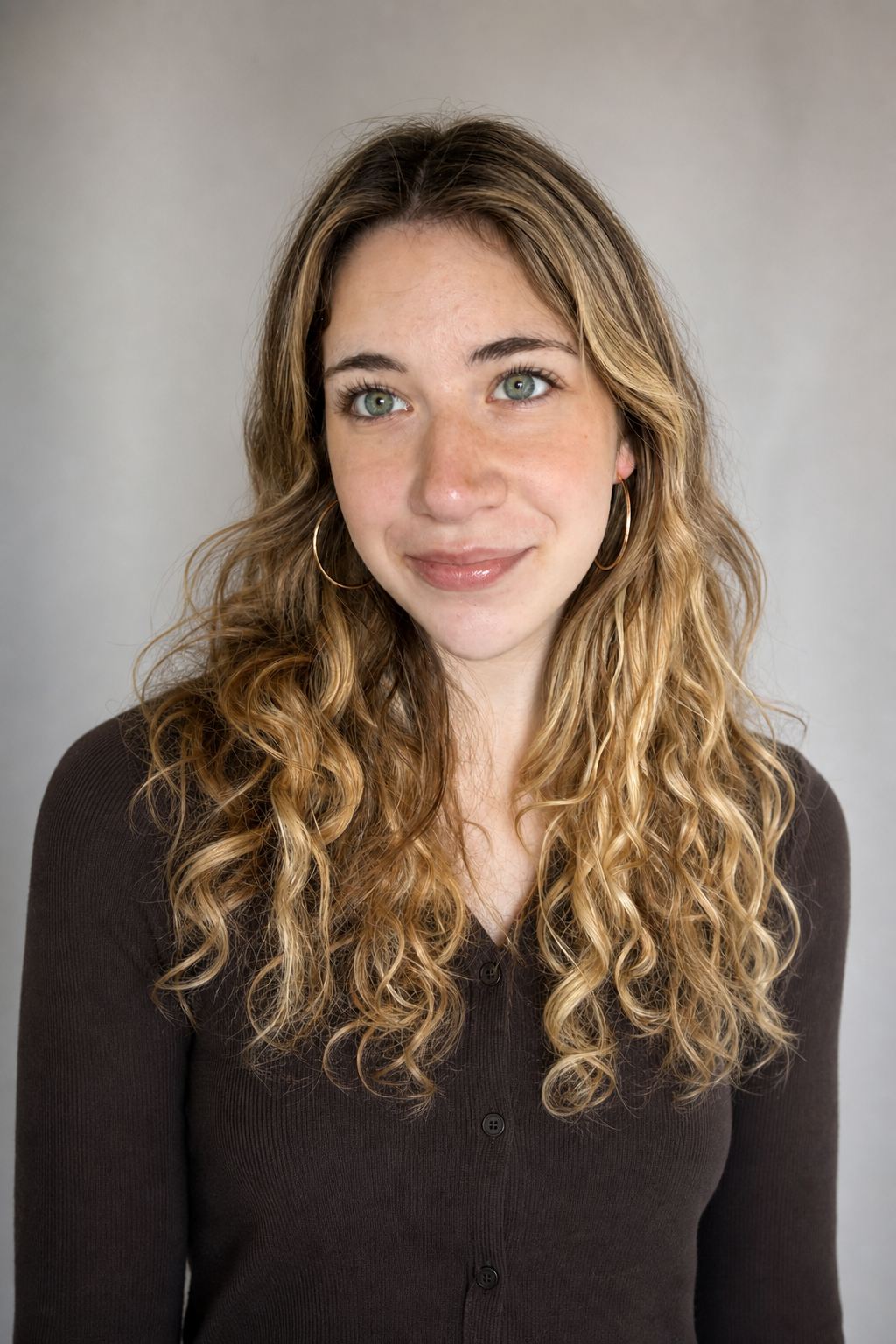
I am Tammi Stein, a researcher majoring in psychology with an emphasis in behavioral and cognitive neuroscience. I focus on performing laboratory research and converting this into a deeper understanding of pharmaceutical sciences.
01 / About
I am pursuing a Bachelor of Science at the University of Florida and expect to graduate in Spring 2027.
My interests span psychopharmacology, neurological disorders, behavioral neuroscience, cognitive neuroscience, neurodegeneration, translational research, and animal models of disease. I aspire to pursue a PhD in pharmacology as I contribute to research that helps treat individuals diagnosed with neurological and psychiatric conditions.
02 / Research
Current USP project
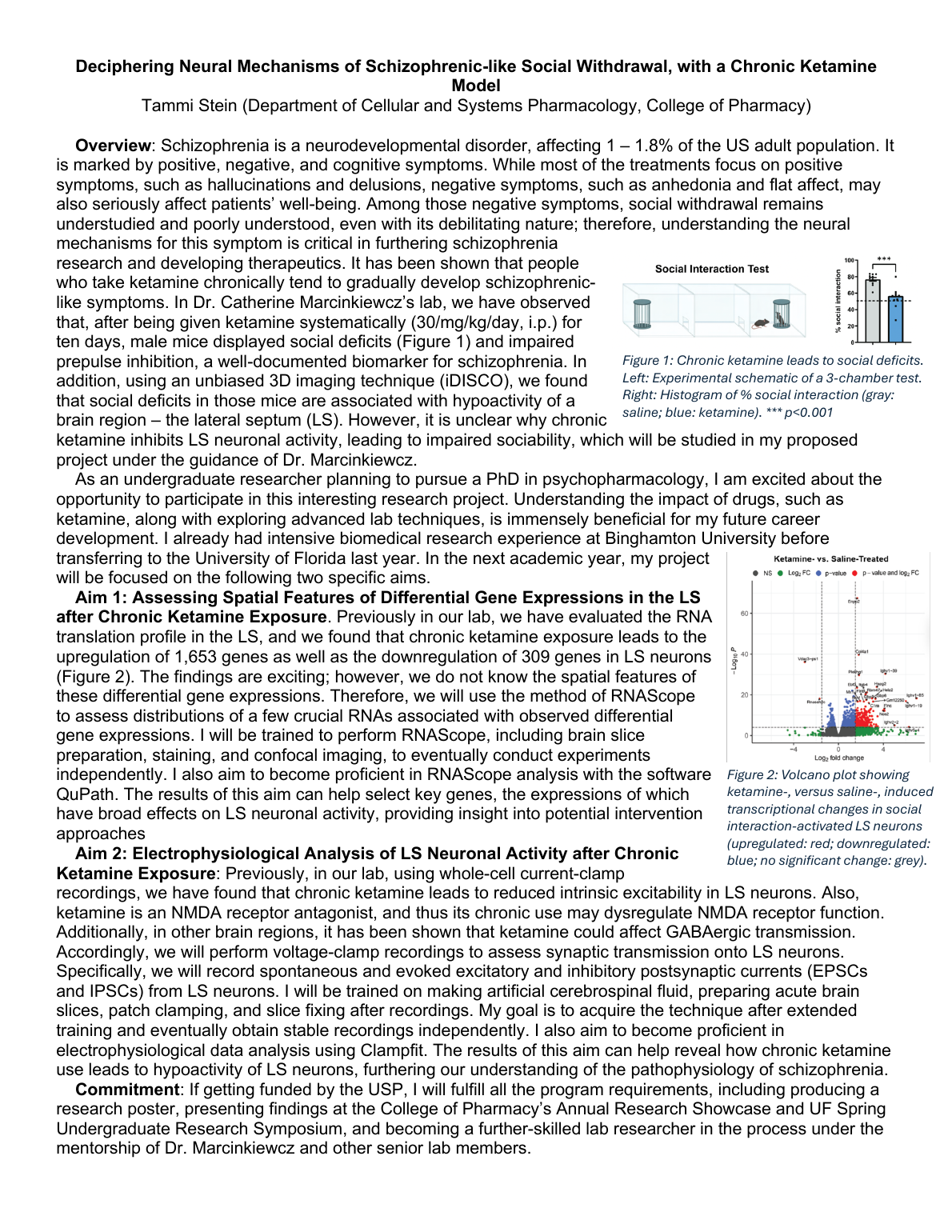
Research proposal overview · chronic ketamine, social behavior, and lateral septum activity
Social withdrawal is a debilitating yet understudied negative symptom of schizophrenia. In the Marcinkiewcz Lab, chronic ketamine exposure in mice has been associated with social deficits, impaired prepulse inhibition, and reduced activity in the lateral septum. My project evaluates why chronic ketamine usage inhibits this brain region and, specifically, its role in social withdrawal.
I work alongside postdoctoral researcher Nagalakshmi Balasubramanian and Ruixang Wang, analyzing mouse brain slices, working with mice, evaluating EEG recordings through Sirenia Sleep software, and organizing data with QuPath and Microsoft Excel. As the project progresses, I will train in RNAscope, brain-slice preparation, staining, confocal imaging, electrophysiology, patch clamping, and data analysis to investigate gene-expression patterns and synaptic activity in lateral septum neurons.
Aim 01
Map spatial features of differential gene expression after chronic ketamine exposure.
Aim 02
Analyze lateral septum neuronal activity through electrophysiological recordings.
Previous experience
As a student researcher in Binghamton University’s First-Year Research Immersion Program (August 2023–December 2024), I investigated Japanese knotweed and natural compounds including osthole, resveratrol, and polydatin in models of LPS-induced inflammation and non-alcoholic fatty liver disease. I presented the team’s findings at the FRI poster session and served as multimedia chair for FRI Ambassadors.
03 / Coursework
Academic foundation
B.S. Psychology · Expected May 2027
PSB 3340 · Behavioral Neuroscience
BSC 2010/2011 · Integrated Principles of Biology I & II
BSC 2010L/2011L · Integrated Principles of Biology Labs
STA 2023/3024 · Introduction to Statistics I & II
CHM 2045/2046 · General Chemistry I & II
CHM 2045L/2046L · General Chemistry Labs
HSC 3537 · Health & Medical Terminology
PSY 2012 · General Psychology
Selected completed and enrolled coursework from the University of Florida transcript dated August 31, 2025.
04 / CV & Résumé
Selected experience
Cell culture, RNA extraction, qPCR, gel electrophoresis, thiochrome and MTT assays, mouse-brain image analysis, QuPath, and data interpretation.
Event and Community Outreach Chair for Balanced Living in STEM, plus multimedia leadership in Binghamton’s FRI Ambassadors program.
Research poster writing and presentation, article summaries, digital design, and an honorable-mention health narrative presented at the International Young Researchers’ Conference.
Documents
Choose the concise résumé or the research-focused curriculum vitae.
CVS employment, additional behavioral-mice responsibilities, and prospective co-authorships should be added once titles, dates, duties, and publication status are confirmed.